

How Much Money Does It Take To Give Vitamins To Poor Countries
Key Facts
-
- Only 64 per cent of children in need are receiving the life-deliverance benefits of A subjoining. And more than 140 million children are being left behind.
- The coverage of Vessel programmes dropped aside more than half in countries with the highest under-five mortality rates in 2022 – the same countries where VAS is needed the most.
- The number of children left-handed unprotected in high-mortality countries more than tripled 'tween 2022 and 2022, jumping from 19 million to 62 million.
- The world-wide community crapper change the course of VAS programmes and save lives by improving consolidation with other programs to progress to every last child, strengthening monitoring to key the unreachable, and building knowledge on the most effective platforms to pass all children 6-59 months.
Download
Admittance Splashboard
Vitamin A supplementation saves lives
For children living in countries where low-five mortality is high and axerophthol deficiency is a public health problem, axerophthol supplementation (VAS) provides vital protection from blindness and decreases their risk of dying from preventable causes so much as rubeola and diarrhea.[1] During a great deal of early childhood – from 6 months to 5 age of age – two high-dose supplements of vitamin A per year, spaced four to six months apart, can strengthen the immune systems and improve chances of survival.[2]
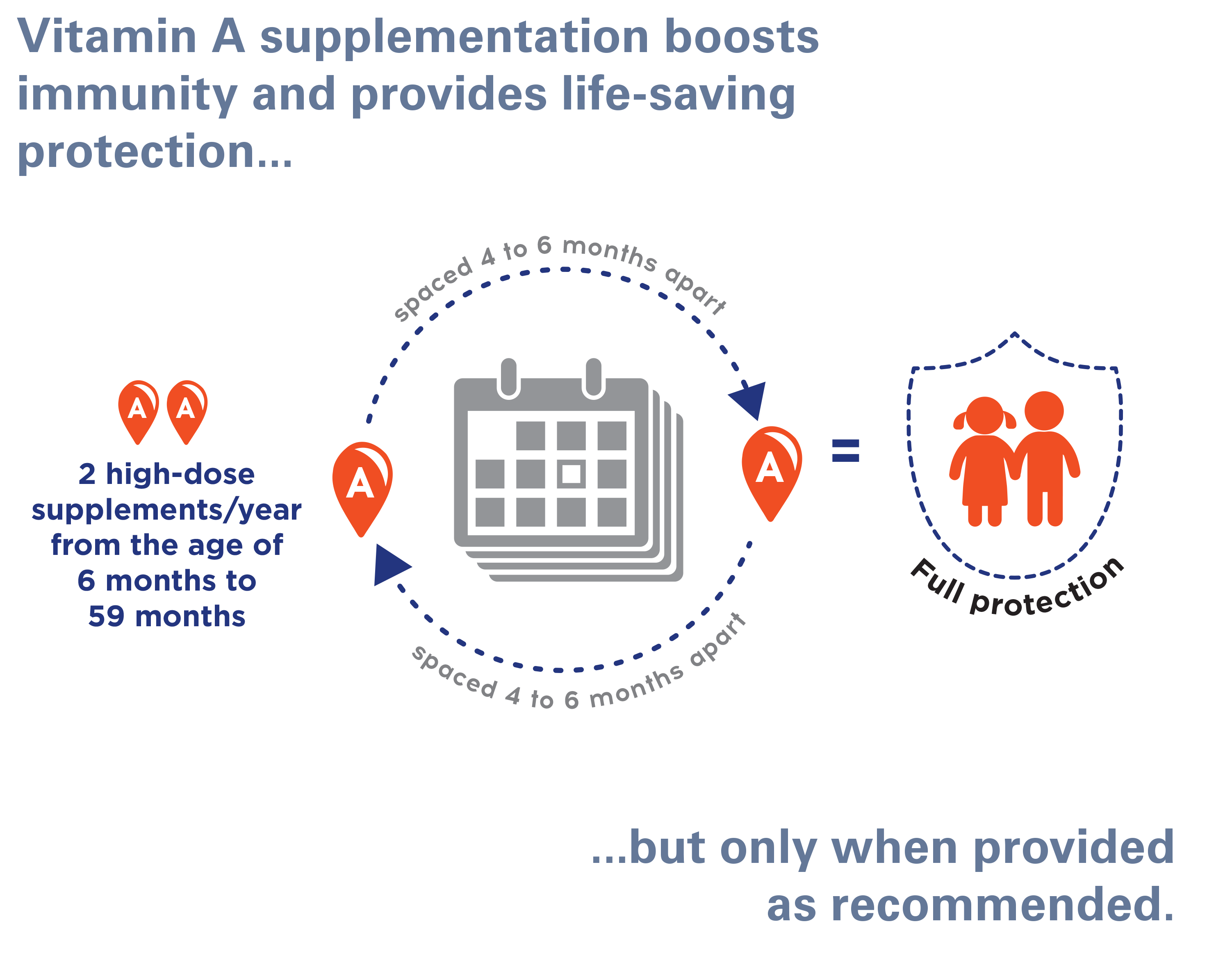
Like complete forms of malnutrition, vitamin A deficiency is a marker of inequality. In countries where diets are lacking in vitamin A and infections and deaths are common, supplementation programmes hand over open children a wagerer chance to survive, develop and thrive.
Since the year 2000, global efforts to scale raised VAS programmes have yielded dramatic improvements in coverage, contributing to drops in child mortality.[1-3] As yet today, VAS programmes are in crisis.
This UNICEF report, Reporting at a Juncture: New directions for vitamin A supplementation programmes , is an effort to sound the alarm.
Global coverage of vitamin A supplementation has dropped to a disgraceful six-year low, leaving more than one third of children unprotected from the annihilating effects of vitamin A inadequacy – and unmitigated inequities remain in reaching the children most in want. As Vessel delivery shifts and countries lose platforms that they have relied on to with success deliver vitamin A in the past, the need to chart new directions for the future of VAS programmes has never been more urgent.
Two drops for natural selection
Vitamin A supplements bid influential lifesaving protection: they can reduce child mortality by at least 12 per cent.[3]
In 2022, 64 per cent of children in motivation in priority countries were reached with two doses of vitamin A – but much 141 million children were left behind, leaving them vulnerable to disease and death. The situation is most alarming in Western and Central Africa, where two-dose coverage was the lowest of all regions in 2022, reaching just more than half of children in need.
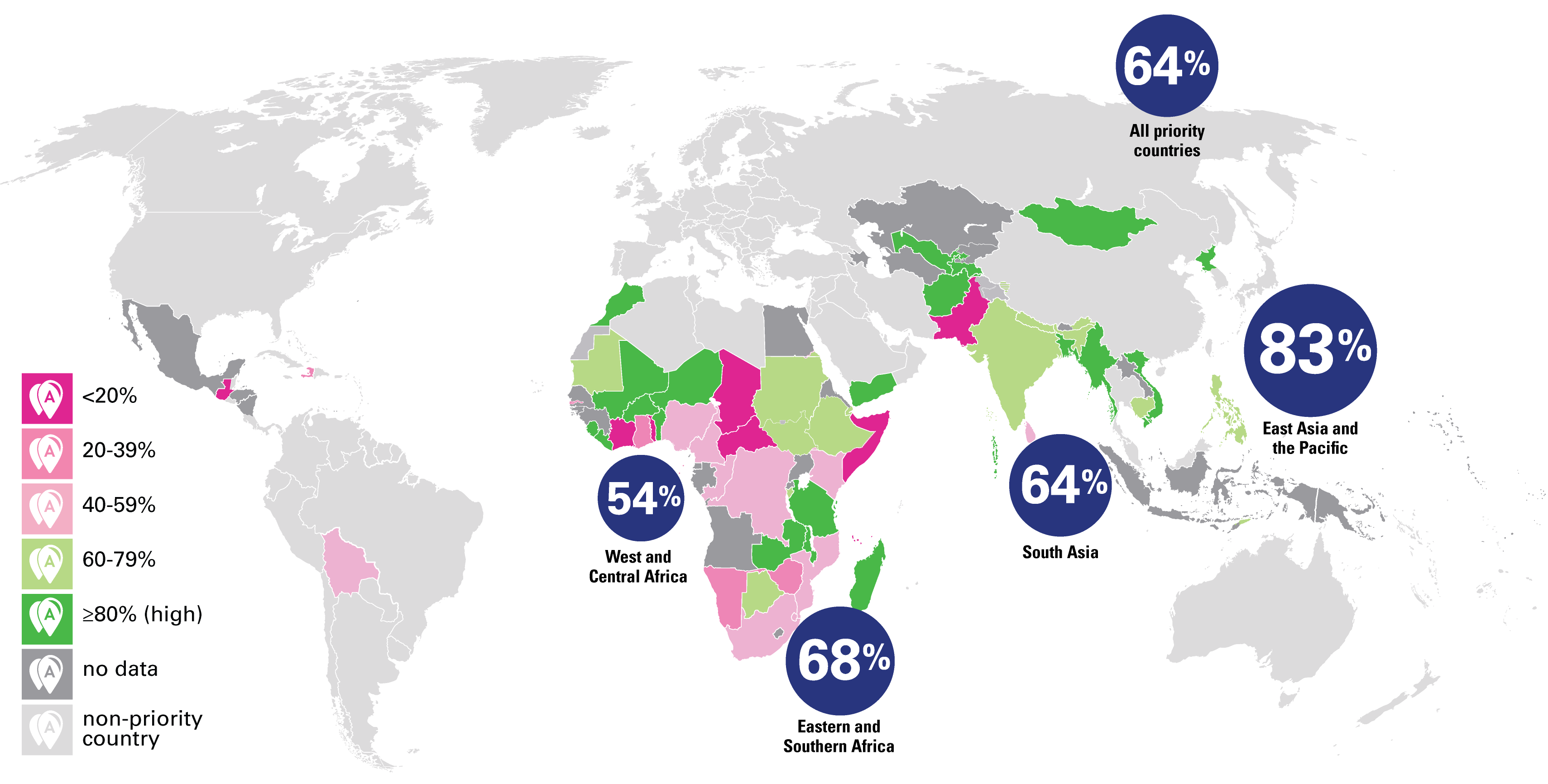
Ball-shaped coverage dropped to a sise-yr low in 2022. At the same meter, deep fluctuations in coverage in short-term time spans are apparent in a turn of regions, in particular those with weak routine health systems, so much as West and Central Africa, Southwest Asia and Mid-Atlantic and Southern Africa, leaving open lives unprotected.
Unmasking the equities
VAS programmes reduce deathrate in populations suffering from vitamin A want.[3] Numerous of the countries with the highest low-five mortality rates are fragile contexts where health systems are weak, meaning that children have an eve greater need for the life-delivery protection of VAS. In these contexts, children are moribund from preventable infections, and VAS can help safeguard their bodies against illness and beef up their resilience.
'tween 2022 and 2022, VAS coverage born away Thomas More than half in countries with the highest under-fivesome mortality – the equivalent countries where it is needed the most. Consequently, the number of children unexpended unprotected more tripled in tall-mortality countries during this point, increasing from 19 million to 62 one thousand thousand.
More work is required to make programmes sustainable
A sustainable VAS programme maintains systematically heights VAS coverage over time, even as funding sources and livery platforms shift, change operating theatre cease.
Globally, VAS programme sustainability is fragile, with wide variability in the coverage levels achieved by independent countries over sentence. Fewer than single fractional of precedence countries were able to achieve pinched coverage in at least 8 of the past 10 semesters.
Reportage variability highlights the need to ensure that VAS programmes are a part of the broader health systems approach and well-intermingled into the preparation, financing and delivery of health and nutriment services.
The way forward
A world without vitamin A deficiency is possible. Yet until nutritious diets are a world for every fry, Vessel is a powerful solution for saving lives. Since 2000, the dramatic shell-sprouted of VAS programmes has protected millions of children from the devastating consequences of vitamin A deficiency. Yet today, progress in reaching all targeted children has halted and risks backsliding.
IT is not too late to re-graph the future of Vessel programmes. But if we fail to dissemble now, we will fall back our hard-won progress and jeopardize the lives of millions of children. American Samoa the world mobilizes towards the 2030 Agenda for Sustainable Developing – and particularly the aim of ending preventable deaths in children low age 5 – there has never been a better time to reprioritize this safe, cost-efficient and evidence-based intervention.
Endnotes
[1] Stevens, G., et AL., 'Trends and mortality effects of vitamin A deficiency in children in 138 low-income and middle-income countries between 1991 and 2022: A pooled analysis of population-based surveys', Lancet Global Health, vol. 3, no. 9, September 2022, pp. 528–536.
[2] World Wellness Organization, Vitamin A supplementation: Full set of recommendations, WHO, Geneva, 2022, <HTTP://www.who.int/elena/titles/full_recommendations/vitamina_supp/en/>, accessed 20 February 2022.
[3] Imdad, A., et al., 'Vitamin A supplementation for preventing morbidity and fatality rate in children from six months to five years of geezerhoo', Cochrane Database of Systematic Reviews, no. 3, 10 March 2022.
How Much Money Does It Take To Give Vitamins To Poor Countries
Source: https://data.unicef.org/resources/vitamin-a-coverage/
Posted by: sototheack.blogspot.com
0 Response to "How Much Money Does It Take To Give Vitamins To Poor Countries"
Post a Comment